Thursday, 22 December 2011

Adelaide

We are now in Aldinga Beach, which is about 30 kms south of Adelaide.   And tonight I went for a walk along the sea front, just as the sun was setting over the sea.   I had forgotten how spectacular it is, and memories flooded back to the nine years we spent in our house by the shore at Henley Beach.   We spent many an hour, often with a glass of wine in the hand, sitting on our front verandah, watching the sun set over the ocean.

Since arriving at Darren's house we have helped him clean up the house and side extension in readiness for Christmas Day.   We also checked all the chairs outside, and the wood in the extension, for any red back spiders that may be lurking there.    I only found one red back spider, which I killed pretty sharply.   The protection of the native wildlife only goes so far, when it comes to red back spiders.

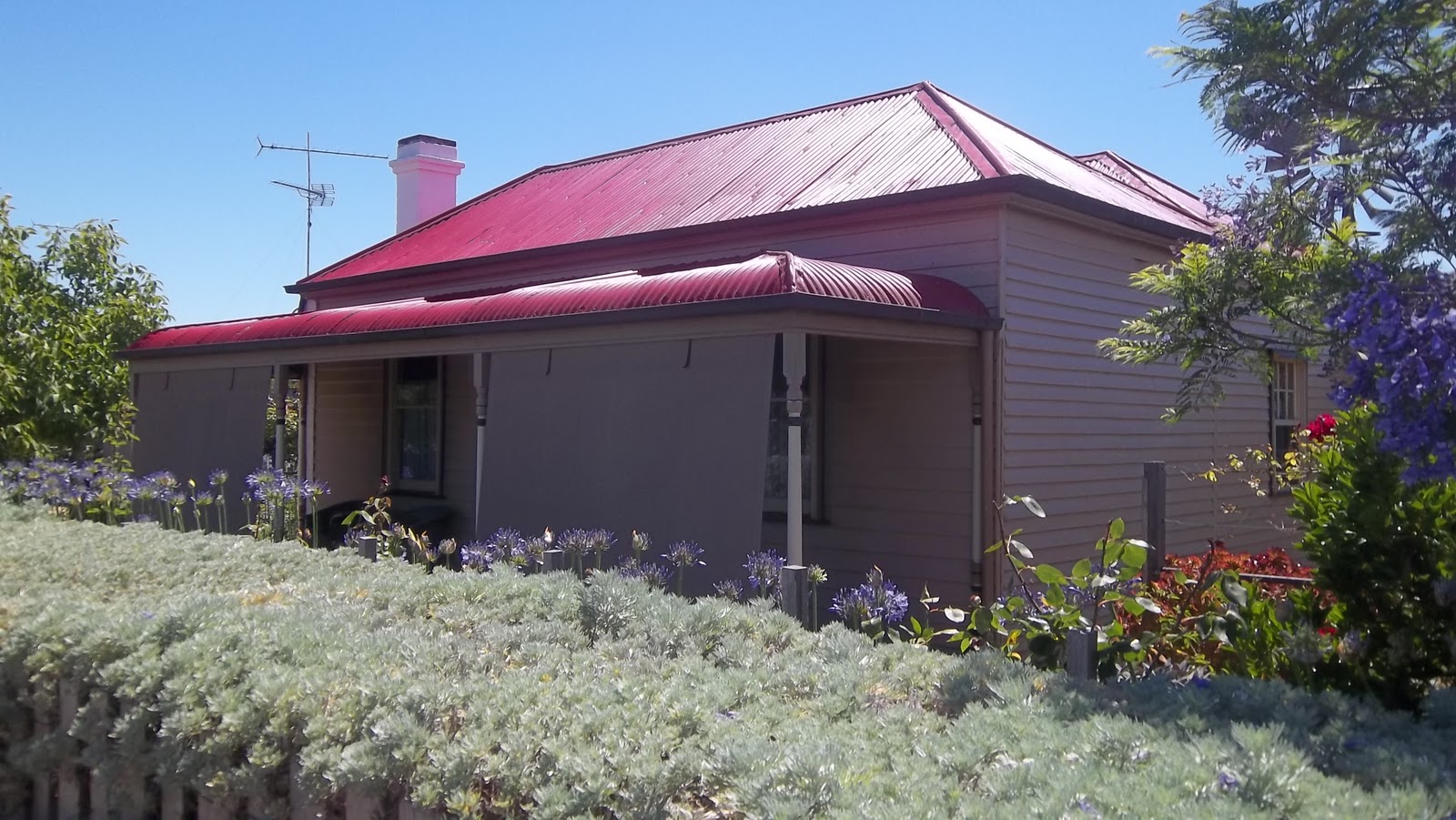
Darren's house in Aldinga Beach.
 Darren's new outdoor setting.   An early Christmas present.
 The side extension awaiting more insulation and the wall and ceiling boards.
Walter sitting and relaxing after his hard work.
Darren's office complex in Kingswood.    Very smart!  
 The 'board room'.  
Off to Rundle Mall for a shopping spree.   Very busy and very noisy.    Are Australians always this noisy or is it just Christmas excitement?
 The silver balls.   A well known icon in Rundle Street.   And a popular meeting spot, but today it was being used by World Vision.
 Lunch in the Myer Food hall.    Asian pancakes called Bing Boy and very delicious.
 I remember when the Myers Centre opened, and the food hall.    Emma worked at a stall here, for a short time.   It was a healthy food stall, if I remember correctly.    Darren also worked at a stall that sold ice creams, not here any more.  Most of the stalls sell Asian food now.
We are experiencing brilliant weather, but I had forgotten about the extreme dryness, and the bright glare takes some getting used to, so I try to keep out of the sunshine as much as possible.  And much moisturiser is needed for the dry skin.

And before I forget, I must own up to getting lost when I went for my walk (in my flip flops/thongs/jandals) this evening.   I got lost in the twisty side streets around Darren's house, and I had to call Darren to come and collect me.    An expensive call as I rang via the UK!    It was dark by this stage too.  And my feet were sore.    And I was quietly having a panic attack.    No sympathy from the men though.    My call interrupted their enjoyment of a glass of wine (or two) whilst sitting outside on the patio.

Monday, 19 December 2011

Coorong

We have finally arrived at Darren's house in Aldinga Beach, and I am trying to adjust to the glare and dryness of Adelaide and its surrounding areas.  

But first to back track 36 hours.    Southend did not get the severe storm that Adelaide received, however it did rain and the wind blew, but it was not cold, thank goodness.   And no electrical storm.  

Jay and Jespa having fun in the sun hills at Southend.
Yesterday we stopped in Robe for our morning cup of coffee.   In this town the Christmas decorations consisted of coloured paper tied onto the verandah posts.    I really like this simplified approach, rather than glaring neon Christmas lights.
Then we stopped in Kingston to admire The Big Crayfish, sadly looking a little worse for wear, as did the restaurant behind it.   Obviously the 'Big Things' have lost their popularity these days.
 Next door was a tractor on a post, a bit like Marilyn Monroe on a post (on the NSW coast) but more practical and less glamorous.   Apparently it is advertising a tractor museum.
We then drove to the Coorong, which is a National Park and lagoon eco system.   The lagoon system is 130 km long and is home to many species of birds, animals and fish.   The area is below sea level.  One of the unique features is the interaction of water along its length with the sea water and Murray River water meeting rain water and ground water.   It looks at first very uninteresting and desolate and you have to go beyond first impressions to appreciate its beauty and uniqueness.   It is a very delicate eco system, and recently there were concerns about the Coorong area being destroyed due to the severe drought and irresponsible water usage of the Murray River in NSW, Victoria and South Australia.

We parked the camper van by the side of the road and continued in Darren's 4 wheel drive car on a sandy track until we reached the sea.
 A deserted and wild stretch of beach beside the Coorong.
 The brand new long drop toilets at a camping/picnic spot.  No flies or spiders here.
 The smart covered picnic shelter, with a beautiful pine table and benches, all painted with a high gloss paint.
 There is water in this lagoon, first time for a number of years.
 When we visited Ballarat we learned about the Chinese landing in South Australia and walking to Ballarat, in order to avoid the £10 landing fee, which the Victorian Government imposed on all Chinese prospectors.    The walk to Ballarat was extremely difficult, both in length of journey and the difficult terrain.   And this was especially so in the Coorong area.    So the Chinese prospectors decided to build a well, and as they were meticulous craftsmen   they made a well that would last.
The edges of the well were cut out of the limestone, in complete pieces and then carried some distance to the site of the well.   All done by hand.
 Jespa is standing in front of the finished well, still perfect after 150 years.
 They also built a rest house/restaurant alongside the track, which became a road for a short while, until the main road was built.    We noticed in Ballarat that the initial dwellings of the Chinese prospectors were superior in comparison to English and American prospectors, with comfortable sleeping and sitting areas, and better cooking facilities and more varied ingredients for preparing food.    They also looked after each other.   And this was evident again with their approach to travelling through a very difficult area of S.A.
 We stopped at Gemini Downs, which is just outside Salt Creek.     The camping ground is part of a working farm, and used to be run by twins, hence the name Gemini.    Walter used to come here with the students of Nailsworth Secondary School, as part of their outdoor education programme.    They spent time on the farm, as well as visiting the Coorong.

 The farm and camping ground is now run by a son of one of the twins, and sadly it is not as well kept as it used to be.    Schools no longer come here either, although church groups still use it.    It is one of the prettiest camping grounds we have visited but the farmer and his wife are obviously not interested in keeping the place spic and span, nor in promoting it.   When we booked in, they then decided to clean the ablution block. The unit that Darren used, had spider webs everywhere, and it was dusty and over run with millipedes.   Mind you, the owners still held their hands out for the money.    All in all, there were four vans in the camping area, and four units being used.   Surely with Christmas holidays starting, some preparation should have been in order.  We would have liked to tell the owners our views, but interestingly they were not to be found when we left!   I wonder why?

Walter resting outside the unit.   I came across my first Huntsman spider, three in fact, and one of them was beside my foot, which was under the table.   It could have run up my leg!    But I now realise that the spiders in the UK are bigger, blacker and uglier.    The Huntsman, although very large, is light brown and has very dainty legs.  I am still not too keen!  Darren has assured me they do not live in his house.
 Looking towards the bunk house and conference room, with our van in the back ground.
A collection of windmills by the Nelson river crossing.
Walter waiting patiently for the ferry to take him across the river.
Tomorrow will be unpacking day, and a much needed visit to the hairdresser for me.

Friday, 16 December 2011

Southend (on Sea in SA)

The following photo was taken by Darren yesterday when the sun was shining.    Today, the sun is not shining, and we have had a few drops of rain.    However, it is not cold.   The water is still a beautiful aqua  colour, which must be due to the limestone (I think).
 Morning coffee time, combined with a lovely view of the water from the verandah.
 This morning we went for a walk around the coast.   Jay and Jespa posing on top of the anchor from a shipwrecked ship.
 The twisted trunks of a mallee tree.  
 A rest stop.   I am still dressed for the Gold Coast, rather than bush walking.
 The jetty at Southend, not quite the same length as at Southend in the UK.   A working jetty too.
 The limestone rock formations, with ancient tree roots still there.   Very interesting.
 The refrigerated trucks waiting on the crayfish boats to return from checking their pots.    A lucrative business.
 The line up of utility trucks.    I think every second car here is a ute, or a four wheel drive vehicle.   Very practical vehicles, although a few are used just for show.
We drove from Southend to Beachport on the beach, about 20 km.    All very exciting, especially when we got stuck in the sand trying to get off the beach.   Luckily Darren did not panic, and with a little push from us, reversed back onto the beach.   He found another exit, luckily, otherwise he would have had to drive back to Southend again.  
 Beachport.    Population 400 people.   A little larger than Southend.
 A fish lunch at the pub in Beachport.    Huge portions!    And very tasty too.
Tomorrow it is off to the Coorong.

Penola and Coonawarra

Today we travelled, in brilliant sunshine, up to Penola and then on to the Coonawarra wine region.     
We first travelled on a very straight road through the commercial pine forests.    Lots of money is made from the timber industry in this part of the country.

When we stopped in Penola, we headed for the most popular cafe in town for our morning cup of coffee.   And a good choice it was too.    

Penola is known as the town where the then Mary MacKillop met Father Wood, and established the Sisters of St Joseph, and set about establishing schools for Catholic children in South Australia, and then throughout Australia.    She only official took her vows and became Mary of the Cross, after she started her first school in Penola.    This all happened in the late 1880's.    Mary MacKillop became a Saint in October, 2010.   She is widely referred to as a 'Saint for All Australians'.

The main street of Penola, rather deserted, but very sunny.    The small Christmas trees were placed against every verandah post in the main street.   No decorations though.
A beautiful old pub.
 There was a history walk along one of the oldest streets, with free entry to some of the houses.
Mary MacKillop's first school, which included a bedroom and kitchen for the two teachers based there.    There is a copy of the curriculum that she wrote for the St Joseph Schools, which is very progressive for the time.  
 This old building had a very old iron roof.
 Lavender growing in the field.
Unfortunately when I downloaded the photos for the day, I did something (technology) and wiped most of the photos on the camera.    So no photos of the inside of the school house, or the oldest house we saw which had layers and layers of old wall paper on the walls.   It was very rustic!

Then we drove to the Coonawarra region, where there were rows upon rows of grape vines, 20 km long and 10 km wide.   It was a typically hot South Australian day, and you could feel the heat bouncing of the red earth.    The Coonawarra grapes grow in terra rosa clay soil, on top of limestone.  

We visited Wynn's Coonawarra, Katnook and Blok estate.    Walter and Darren sampled some of the wine and spent some money on delicious wines.    They had a 2004 wine from the Blok estate for dinner tonight.    Apparently it was very good.   I finished off the wine we had the previous night.   Not a bad drop either.    

We also ate the most enormous porterhouse steaks tonight.    They were 1 1/2 inches thick, and very large.    I bought them from the butcher in Penola, not cheap, but such a treat.

We are now in Southend, which is quite different from Southend in England.    The bay has white sand and bright blue water (the sun was shining today).    Population 250 people.   I will take more photos tomorrow, seeing that I deleted the photos I took today.   I hope the sun is still shining tomorrow.

Wednesday, 14 December 2011

Mt Gambier revisited.

Today we woke to brilliant sunshine, it was even warm enough to eat breakfast outside.    There was a cool breeze, which meant that the day was not too hot, just pleasantly warm.

We decided to walk around the Blue Lake, while we had plenty of energy.    This is a 5 km walk and we had lots of stops to look at the lake.    The Blue Lake also supplies the drinking water for Mt Gambier, and it is so pure that very little chlorine is added to it.

The line up at one of the viewing platforms.
Of course coffee was necessary before we began.   There are also tours of the old aquifer system, if you wish to look at the lake from close quarters.
This lake is called Valley Lake.    There used to be two more lakes, but the water table has gone town somewhat in the last 100 years.    I wonder why?
Darren, Jespa and I climbed up a very steep path until we got to the top point of the crater.    We had wonderful views from up there, and you could see the southern ocean in the distance, with sea mist above it.
On the top peak there is the Centenary Tower, which was opened in 1904.   Usually the tower is open, but all we could hear was music behind the door.    The tower commemorates100 years since Mount Gambier was sighted and named by Lt James Grant aboard 'The Lady Nelson'.
After all the walking and climbing up to the tower, it was time for our picnic lunch, which Darren had prepared of course.    And very delicious.    We remembered the last time we had had a picnic lunch together, up on the second floor of the Eiffel Tower.   Where we got told off for taking a sharp knife up with us, and I dropped a jar of mayonnaise on the ground and broke the container.   This picnic lunch was very uneventful.
We could have had a barbeque of course.    Barbeque's are available in most Australian parks, and are very popular.    And mostly free too.
No I am not playing 'dead lions', or whatever the game is that you tell the children to play in order to rest after PE, nor have I fainted.    Just lying there relaxing in the sunshine.    And listening to the school children playing in the playground, which was part of their excursion, and knowing that I did not have to supervise them.
In the afternoon we went on the Engelbrecht Cave tour.   The sink hole below is the entrance to a huge complex of limestone caves under the city.   Of course if you are an experienced diver you can enter the water in the caverns and explore the extensive tunnels and caves.  That was not us!  We only went into the two chambers but we learnt about how the caves are formed and how the underground water filters through the limestone.    All very interesting.
This evening we visited the Umpherston Sinkhole, which was once a cave.   The sink hole was created when the top of the chamber fell to the floor of the cave, creating a perfect environment for the 'sunken' garden which James Umpherston built.    Of course up until about the 1930's water covered one third of the sink hole but the water has since gone.    The garden is glorious, with ivy cascading from the top, and the bottom filled with hydrangeas and other tender plants.   I forgot to take my camera!